Telehandlers are powerful machines—but traditionally, they’ve also been fuel-thirsty, loud, and high on emissions. That’s changing fast. Today’s machines are cleaner, smarter, and built for a future where environmental performance is just as important as lifting power.
Have you ever had to swap out gear because it didn’t meet a site’s emission standards? Or heard a supervisor complain about fuel costs, noise, or poor sustainability ratings?
This guide covers how the latest telehandlers are reducing their environmental footprint—and what you can do to make your fleet more efficient and future-ready.
Why Environmental Performance Matters Now
Across mining, construction, and agriculture, Australia’s worksites are under growing pressure to:
- Cut carbon emissions
- Meet Tier 4 and Euro Stage V regulations
- Reduce fuel costs
- Operate quietly in urban or sensitive zones
Choosing environmentally friendly telehandlers is no longer just a nice-to-have—it’s often a site requirement.
“How Are Modern Telehandlers More Eco-Friendly?”
Modern telehandlers reduce emissions and fuel use with:
- Tier 4 / Stage V compliant engines
- Hybrid and electric options
- Smart load management systems
- Quieter, more efficient operation
Engine Advancements: Tier 4 and Stage V Compliance
Many new telehandlers now meet strict global standards:
- Tier 4 (USA) and Stage V (Europe) target particulate matter and NOx emissions
- Require diesel particulate filters (DPFs), exhaust gas recirculation (EGR), and SCR systems
- Lower environmental impact and mandatory for many Tier 1 projects
Dieci Australia offers compliant models with full documentation for site approval.
Hybrid and Electric Options
While not yet standard across all fleets, hybrid and fully electric telehandlers are emerging for:
- Indoor or zero-emission zones
- Enclosed or poorly ventilated worksites
- Reducing fuel use while maintaining power
Some Dieci models in Europe are electric-ready, and Australian adoption is accelerating.
Fuel Efficiency Improvements
New engine mapping, start-stop systems, and eco operating modes are helping operators:
- Use less fuel without sacrificing performance
- Reduce idle time with smart diagnostics
- Extend service intervals and filter life
Less fuel burned = lower emissions and lower running costs.
Noise Reduction for Urban Sites
Environmental compliance isn’t just about emissions:
- Quieter engines reduce noise pollution near hospitals, schools, or city centres
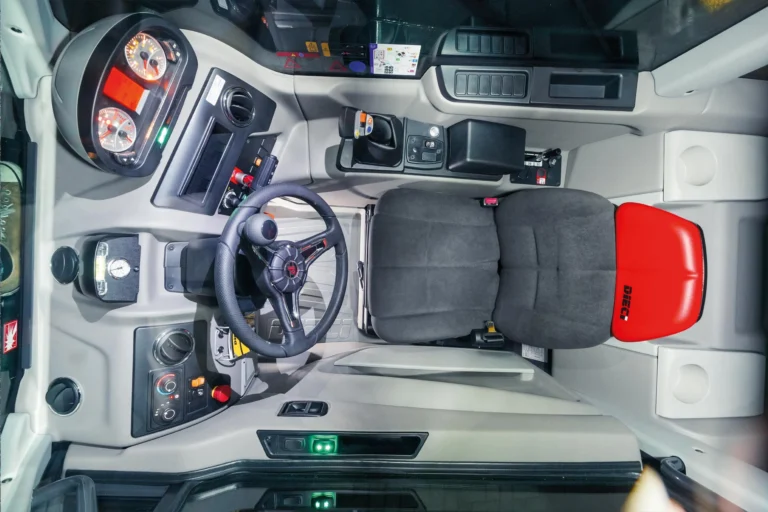
- Insulated cabins and low-decibel exhausts protect workers and communities
Telehandlers that operate below 75 dB can be critical for urban approvals.
How to Choose a Greener Machine
- Check the emissions certification (Tier 4/Stage V)
- Ask about fuel economy stats
- Review idle management features
- Evaluate electric or hybrid options
- Prioritise quieter machines for urban work
How Dieci Supports Eco-Ready Equipment
Dieci Australia offers:
- Emissions-compliant telehandlers with site-ready paperwork
- Machines tuned for optimal fuel economy
- Support for low-emission project requirements
- Consultation on electric and hybrid equipment adoption
Whether your focus is sustainability, cost control, or regulatory compliance – Dieci can guide you to the right machine.
Final Thoughts: Cleaner Machines, Smarter Choices
What would change if your next telehandler used 20% less fuel, operated more quietly, and sailed through environmental compliance checks?
That’s not a future vision—it’s available now. And with tightening standards across Australian sites, the time to transition is now.
Want to upgrade to an eco-compliant machine? Talk to Dieci Australia about low-emission telehandlers and site-ready environmental support.