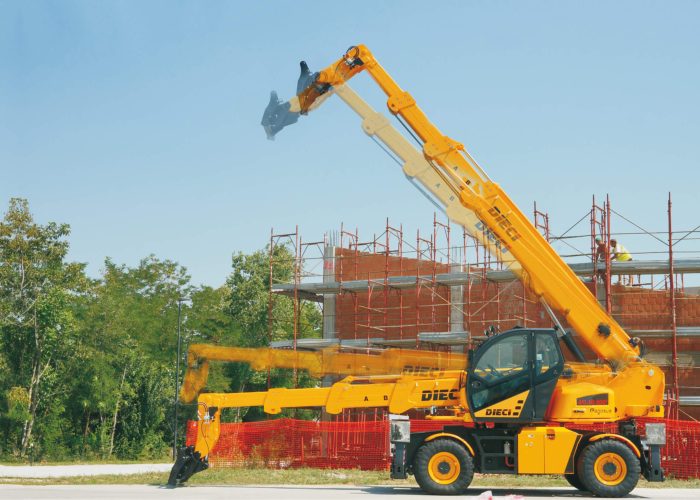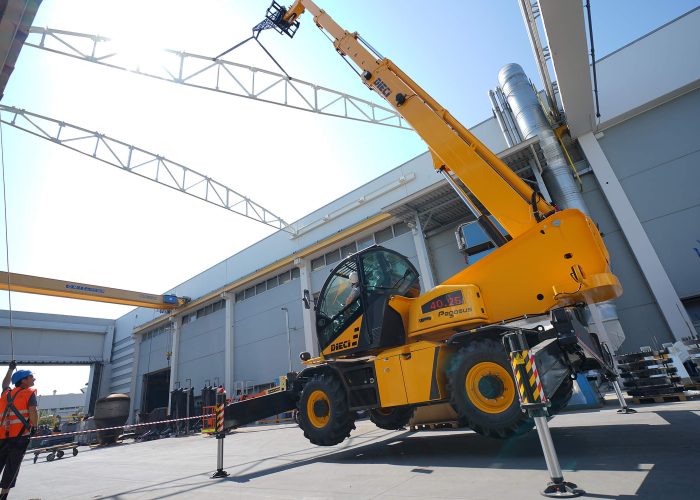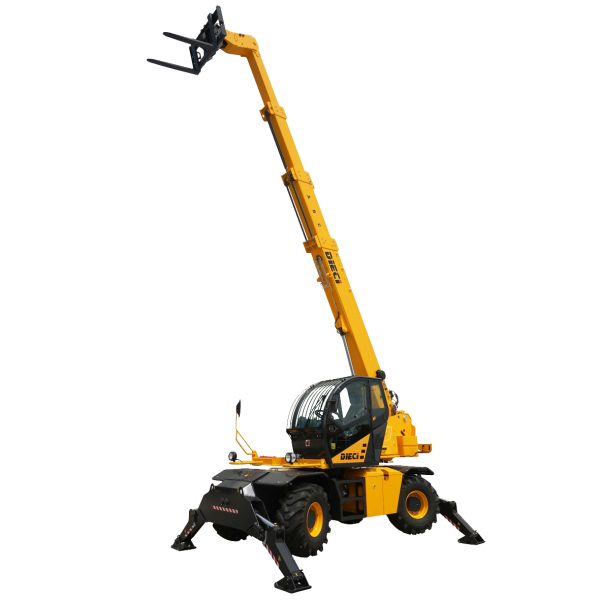
Dieci Pegasus 400° 38.16 3.8t rotating mining telehandler
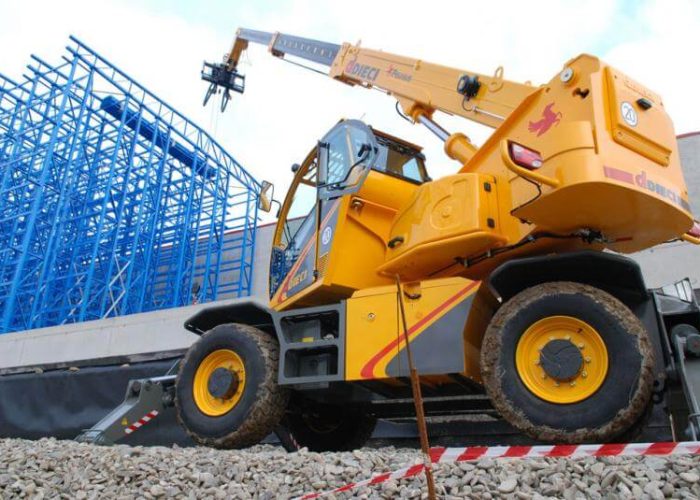
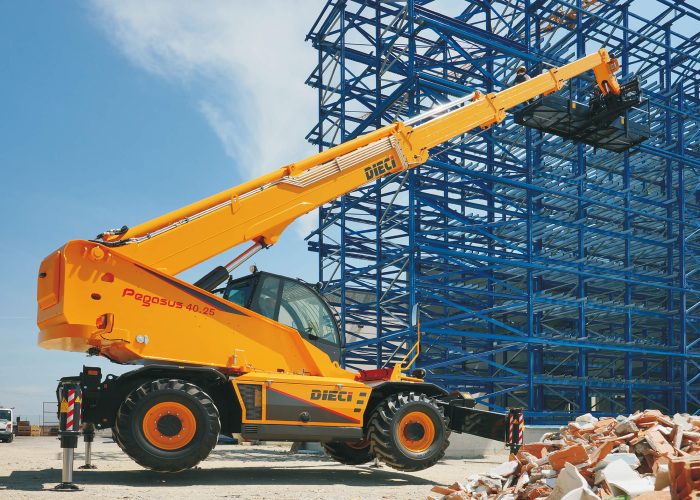
The Dieci Pegasus 400° 38.16 3.8t rotating mining telehandler is ideal for mining support and maintenance operations across Australia.
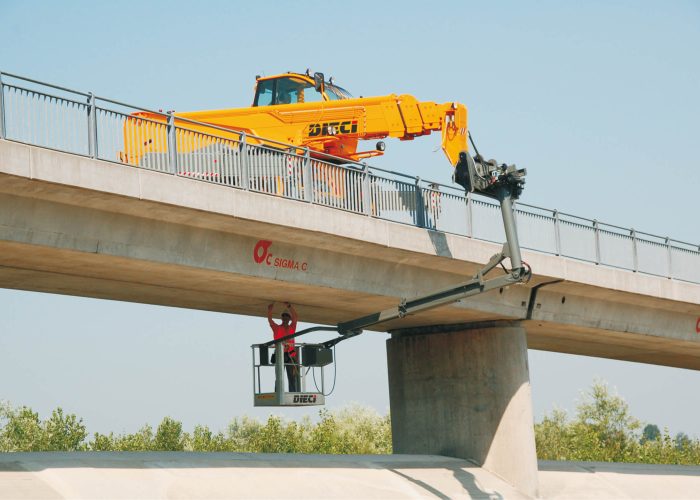
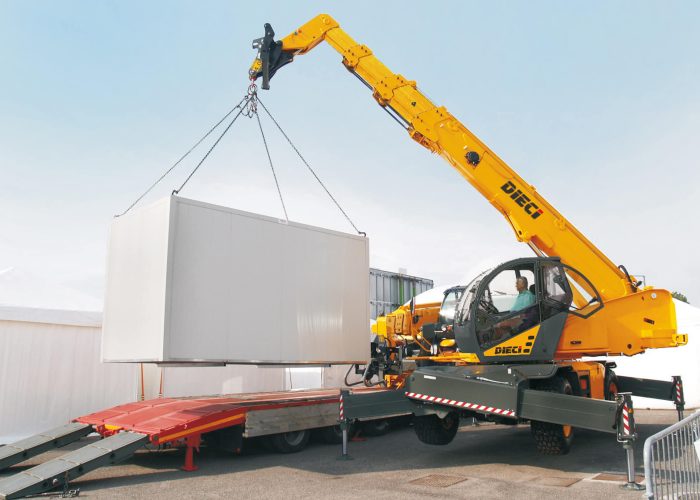
The Pegasus 38.16, a rotational telehandler with 400° non-continuous rotations, is custom-designed for mining operations in Australia. Its remarkable versatility enables smooth transitions between telehandler, aerial platform, and crane functionalities, delivering unparalleled flexibility in various mining tasks.
Key highlights of this model include its user-friendly design, robust construction, and comprehensive safety features. Equipped with a load limiter and state-of-the-art equipment, operators have precise control over the vehicle in every mining scenario, ensuring optimal performance and safety across varying efforts, loads, terrains, and speeds.
The spacious and ergonomic cab of the Pegasus 38.16 is meticulously designed for operator comfort and efficiency. Featuring a colour TFT display with an intuitive graphical interface, operators can effortlessly monitor and manage all vehicle functions, enhancing productivity and safety in demanding mining environments.
We offer a full range of mining telehandlers and rotational telehandlers. Contact our sales team for more information.
Request a Follow-up From Your Local Dieci Sales Team
Pegasus 400° 38.16 Mining Telehandler Frequently Asked Questions
How is the Pegasus 400° 38.16 mining telehandler different from a regular Pegasus 38.16?
The mine-spec Pegasus 400° 38.16 features modifications intended to meet the stringent safety and performance requirements found on modern Australian mining sites. Dieci Australia can also implement custom modifications to meet your specific mines requirements for safety, functionality and attachment selection.
What is a rotational telehandler?
A rotational telehandler, such as the Dieci Pegasus 400 38.16 mining telehandler, features a turret-mounted boom that can rotate 400 degrees, allowing loads to be lifted and positioned without having to reposition the entire machine. This provides significantly greater flexibility than a conventional telehandler and enables a single machine to perform the roles of a telehandler, crane, and elevated work platform when equipped with the appropriate attachments.
The rotating upper structure makes rotational telehandlers particularly well suited to mining, construction, industrial, and maintenance applications where access is restricted or precise load placement is required. By reducing the need for repeated machine movements, a rotational telehandler can improve productivity, enhance safety, and maximise efficiency on busy worksites.
What is a rotational telehandler?
A rotational telehandler, such as the Dieci Pegasus 400 38.16 mining telehandler, features a turret-mounted boom that can rotate 400 degrees, allowing loads to be lifted and positioned without having to reposition the entire machine. This provides significantly greater flexibility than a conventional telehandler and enables a single machine to perform the roles of a telehandler, crane, and elevated work platform when equipped with the appropriate attachments.
The rotating upper structure makes rotational telehandlers particularly well suited to mining, construction, industrial, and maintenance applications where access is restricted or precise load placement is required. By reducing the need for repeated machine movements, a rotational telehandler can improve productivity, enhance safety, and maximise efficiency on busy worksites.
What is a rotational telehandler?
A rotational telehandler, such as the Dieci Pegasus 400 38.16 mining telehandler, features a turret-mounted boom that can rotate 400 degrees, allowing loads to be lifted and positioned without having to reposition the entire machine. This provides significantly greater flexibility than a conventional telehandler and enables a single machine to perform the roles of a telehandler, crane, and elevated work platform when equipped with the appropriate attachments.
The rotating upper structure makes rotational telehandlers particularly well suited to mining, construction, industrial, and maintenance applications where access is restricted or precise load placement is required. By reducing the need for repeated machine movements, a rotational telehandler can improve productivity, enhance safety, and maximise efficiency on busy worksites.
What is the difference between 360° and 400° rotation?
The main difference between a 360-degree continuous rotation system and a 400-degree non-continuous rotation system lies in how the turret can be rotated. A 360-degree continuous system can rotate endlessly in either direction without reaching a stop point, which can be advantageous for specialised applications requiring constant rotation.
In contrast, the Dieci Pegasus 400 38.16 features a 400-degree non-continuous rotating turret, providing an additional 40 degrees of working range compared to a conventional 360-degree system. Although the turret cannot rotate continuously, the generous 400-degree arc allows operators to access an extensive working area without repositioning the machine. For the vast majority of construction, industrial, and maintenance applications, this extra rotation provides excellent flexibility while retaining the simplicity and robustness of a non-continuous design.
What tasks on a mine site would a rotational telehander be used for?
Rotational telehandlers are highly versatile machines that are well suited to a wide range of tasks on Australian mine sites. Common applications include maintenance shutdowns, processing plant construction, structural steel erection, pipe installation, equipment replacement, and the positioning of pumps, motors, conveyors, and other heavy components. With the appropriate attachments, a rotational telehandler can also be used as a crane for suspended loads or fitted with a work platform to provide safe elevated access for maintenance personnel.
The 400-degree rotating turret of the Dieci Pegasus 400 38.16 allows loads to be lifted and positioned over a large working area without repeatedly repositioning the machine. This makes it particularly valuable in confined processing plants, workshops, and shutdown zones where access is limited and precise load placement is critical. By combining the capabilities of a telehandler, crane, and elevated work platform in a single machine, a rotational telehandler can improve productivity, reduce equipment requirements, and minimise downtime during maintenance and construction activities on mine sites.
What steering modes does the Pegasus 400° 38.16 mining telehandler have?
The Dieci Pegasus 400° 38.16 mining telehandler is equipped with three steering modes—two-wheel steer, four-wheel steer, and crab steer—providing the versatility required to operate efficiently across demanding Australian mine sites and industrial facilities.
Two-wheel steer delivers stable handling and is ideal for travelling longer distances around site and transporting materials and equipment between work areas.
Four-wheel steer significantly reduces the turning radius, allowing operators to manoeuvre the machine more effectively in confined areas such as processing plants, workshops, and maintenance shutdown zones.
Crab steer enables the front and rear wheels to turn in the same direction, allowing the machine to move diagonally. This mode is particularly valuable when positioning pipework, structural steel, pumps, motors, conveyors, and other plant components alongside existing infrastructure or within restricted work areas. The result is more precise load placement, improved control, and fewer machine repositioning movements, helping to maximise productivity and minimise downtime during mining and maintenance activities.
What engine powers the Pegasus 400° 38.16 mining telehandler?
The Dieci Pegasus 400° 38.16 mining telehandler is equipped with a 98 hp / 73.4 kW diesel engine that is manufactured by Kubota. The turbo charged engine is Stage IIIA/Tier 3 emissions compliant, resulting in a reliable and efficient rotational telehandler that is well suited to the tough conditions found on construction, civil, and infrastructure projects.