Civil infrastructure projects are built on sequencing. Earthworks, services, structures, and finishes all rely on the previous stage being completed cleanly and on time. When equipment roles overlap or machines are forced to perform outside their intended purpose, delays quickly compound.
Across Australian civil projects, contractors are increasingly relying on dedicated dumpers paired with site-based mixer trucks to maintain control, reduce congestion, and protect critical workflows.
Why Civil Infrastructure Sites Demand Role Clarity
Road upgrades, drainage works, subdivisions, and utilities projects often operate across long timeframes with multiple crews working in parallel. On these sites, efficiency depends less on speed and more on coordination.
Common challenges include:
- Spoil removal competing with structural works
- Concrete placement delayed by shared equipment
- Material handling disrupting active pours
These issues are rarely caused by labour or planning alone. They are often the result of equipment being stretched across incompatible tasks.
The Role of Dedicated Dumpers in Civil Works
Material movement is constant throughout civil construction. From initial excavation to final backfilling, spoil, fill, and aggregates must be moved continuously without interrupting other operations.
The DP7000 Dumper is commonly used on civil infrastructure sites to:
- Handle continuous spoil and bulk material movement
- Support trenching, drainage, and service installation
- Operate reliably on uneven or confined ground conditions
By assigning material handling to a dedicated dumper, civil crews can progress through earthworks and preparation stages without creating downstream delays.
Supporting Structural Works with Site Based Mixer Trucks
Concrete placement introduces time sensitivity and quality requirements that demand specialised equipment. Site-based mixer trucks allow pours to be planned and executed without relying on general material handling assets.
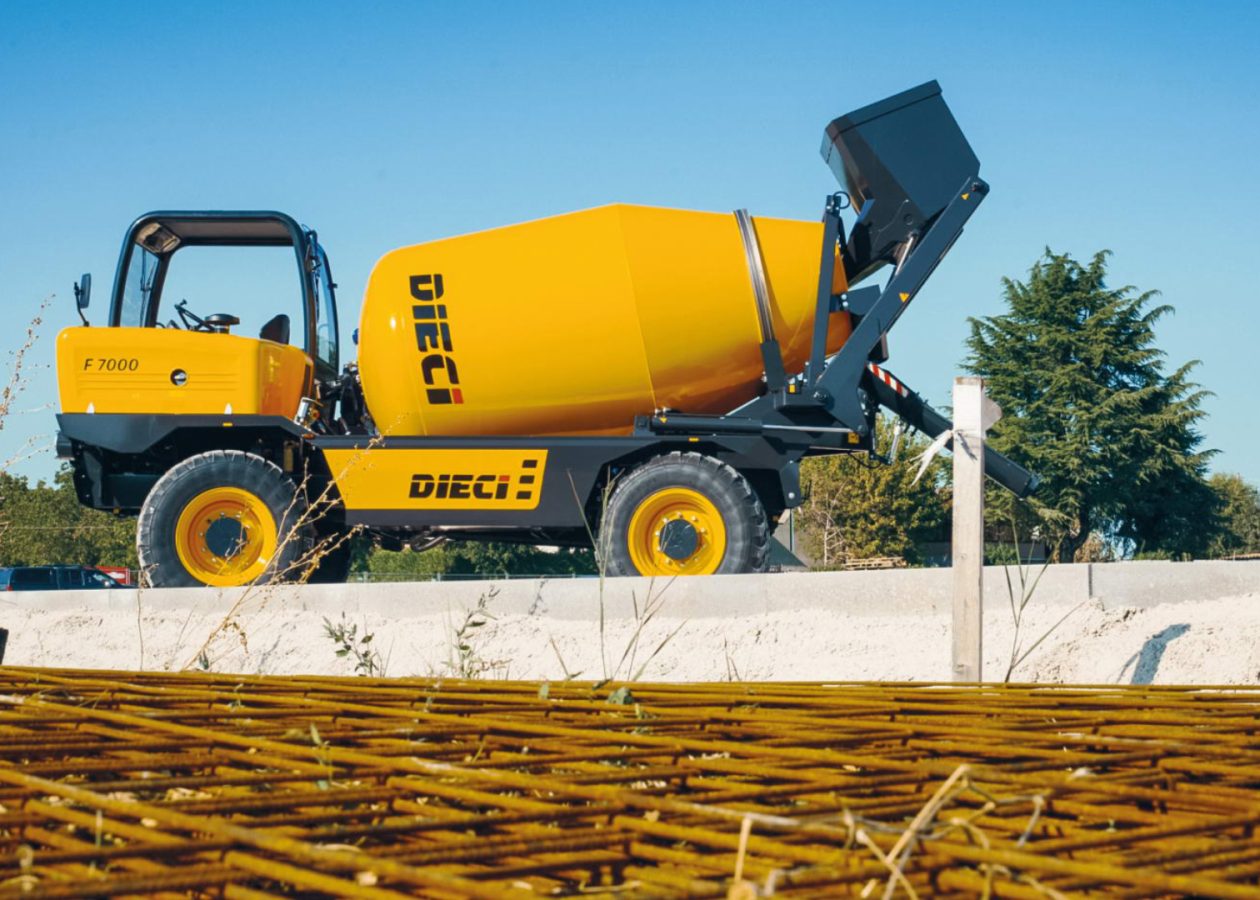
The F7000 Mixer Truck supports civil infrastructure works by:
- Delivering a consistent 5 cubic metre concrete yield per batch
- Supporting footings, slabs, and structural elements
- Operating independently from excavation and material movement
Because the F7000 is designed for site-focused use rather than road haulage, it integrates cleanly into active civil environments where precision and reliability matter most.
Reducing Risk Through Equipment Separation
When dumpers and mixer trucks are assigned distinct roles, civil projects benefit from:
- Reduced congestion between trades
- More predictable scheduling of pours and earthworks
- Lower mechanical strain from mixed-use operation
This separation becomes increasingly valuable as project size and complexity increase.
Built for Long Term Infrastructure Delivery
Both the DP7000 Dumper and F7000 Mixer Truck are designed for ownership-based operations. This allows contractors to standardise processes, train operators effectively, and maintain consistent performance across long-duration projects.
Rather than relying on flexible but compromised solutions, civil contractors gain greater control by investing in equipment that does one job well.
Final Thoughts
What would change if your infrastructure project equipment supported sequencing instead of disrupting it?
For many civil contractors, pairing dedicated dumpers with site-based mixer trucks has become a practical way to protect timelines, reduce risk, and maintain control across complex infrastructure builds.