Most telehandler buyers focus on price first. But price doesn’t lift loads, keep your crew safe, or survive 5+ years on tough Australian sites.
What would change if you compared telehandlers based on real-world performance instead?
This buyer’s checklist breaks down the key specifications that actually matter—from lift capacity and stability to the attachments and hydraulics that impact productivity day-to-day.
The Specs That Should Lead Your Telehandler Decision
Have you ever seen a machine underspec’d for the job? It slows productivity, risks safety, and frustrates operators.
Before you shortlist any models, check the following specs based on how and where you plan to use the machine:
- Lift Capacity — Match this to your heaviest load, factoring in lift height and reach.
- Lift Height — Consider your site’s vertical needs, storage, stacking, or unloading trucks.
- Forward Reach — Longer reach reduces repositioning, especially on congested sites.
- Attachments — Buckets, forks, jibs? Each affects capacity and stability.
- Machine Width & Turning Radius — Crucial for tight spaces and indoor use.
- Stability Systems — Active levelling, load-sensing hydraulics, tilt correction.
Don’t get caught out by only comparing brochure numbers. Ask how those specs work together on your actual terrain and workflow.
Quick Reference: What to Look for When Buying a Telehandler
Use this checklist during your decision-making process:
- Load capacity
- Lift height
- Reach
- Attachments
- Stability
- Machine size
- Powertrain
- Hydraulics
- Maintenance
- Compliance documentation
If you can tick every box, you’re well on your way to buying the right machine—not just the cheapest.
Hidden Trade-Offs Buyers Often Miss
Most people don’t realise that capacity and height are interdependent. A machine that lifts 4T at low height might only lift 1T at full extension.
Attachments also derate capacity. For example, a bucket puts more strain on the boom than forks, affecting the load chart.
Always check the load chart for your exact attachment setup—not just the base machine.
Engine, Transmission & Hydraulics: Why They Matter More Than You Think
Performance on paper is one thing. Real output is another. That’s where your powertrain and hydraulic setup matters:
- Engine power: Impacts cycle times under load
- Transmission type: Smoothness, control, and fuel efficiency
- Hydraulic flow rate: Faster lift/lower cycles, especially under frequent use
Ask your dealer to explain how each spec behaves under real load. If they can’t, it’s time to find one who can.
Designed for Australia: Why Dieci Telehandlers Stand Out
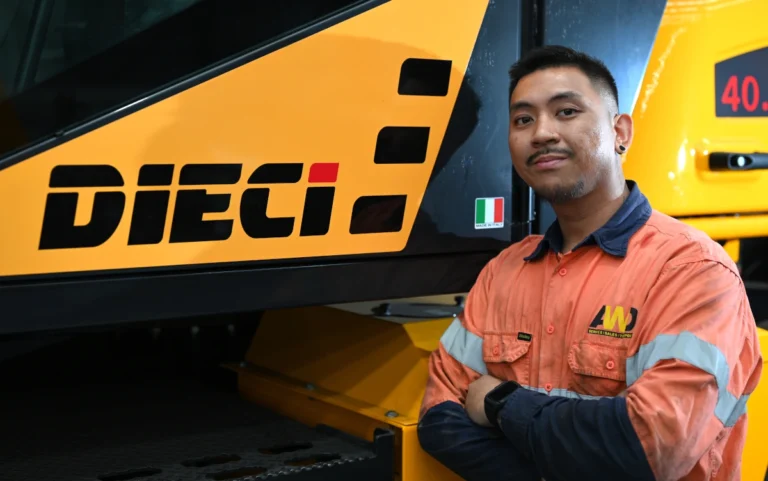
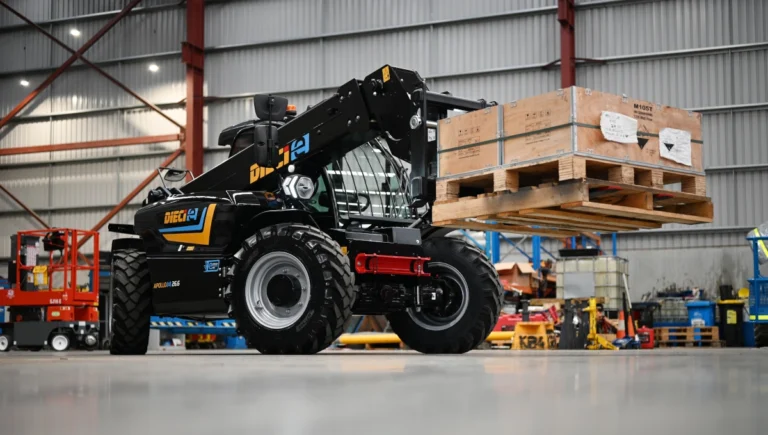
European-designed, but engineered with Australian conditions in mind, Dieci telehandlers combine durability with premium spec:
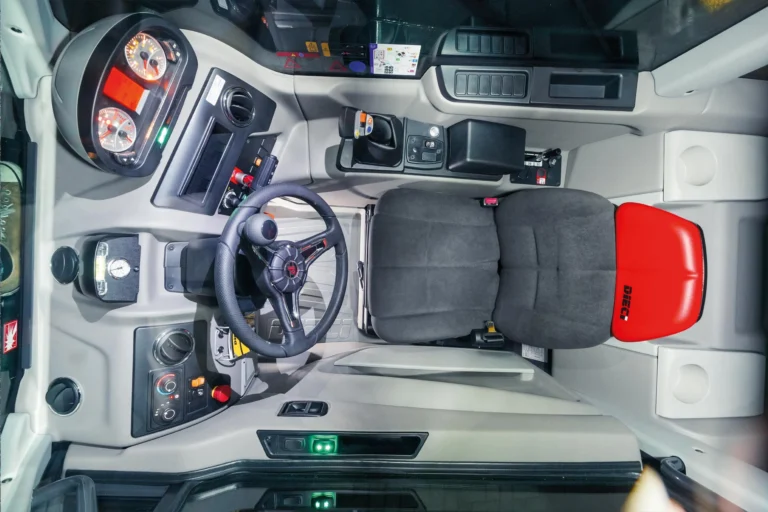
- Load-sensing hydraulics for smoother control
- Precision stability systems
- Engineered attachment compatibility
- Wide model range for tight or open sites
All backed by a nationwide network of authorised service agents and expert support.
Want Personalised Help Choosing the Right Spec?
If you’re comparing options, don’t go it alone. We can help match the right model to your exact work conditions and compliance needs.
- Download the full Telehandler Buyer’s Guide
- Find your local authorised service agent
- Talk to us about your specs
When the machine fits the job, everything runs smoother.