Safety isn’t just about ticking boxes. It’s about keeping people alive, equipment intact, and projects on track.
Yet most safety incidents involving telehandlers can be traced back to one of three things: poor load management, overlooked stability factors, or operator behaviour.
This guide breaks down how these elements work together—and what you can do to manage risk effectively on site.
The 3 Pillars of Telehandler Safety
Safety doesn’t start with a checklist. It starts with a mindset—and with systems that support it.
Here’s what defines a safe telehandler operation:
- Stability systems that prevent tip-overs
- Accurate load management practices
- Operator awareness and correct machine use
Let’s unpack each one.
How Telehandler Stability Systems Work
Modern telehandlers are designed with smart systems to help maintain balance and prevent dangerous scenarios. Key features include:
- Boom position sensors: Detect when loads exceed safe angles
- Tilt correction/levelling: Keeps the chassis level on uneven terrain
- Load moment indicators (LMI): Alerts when stability limits approach
- Hydraulic cut-outs: Automatically limit unsafe movements
These systems assist operators but aren’t fail-safes. Stability still depends heavily on ground conditions, load size, and how the machine is driven.
Why Load Management is More Than Just Capacity
Most people think load safety ends at knowing the machine’s lift limit. But it’s far more complex.
True load management means:
- Understanding how different attachments affect balance
- Adjusting for load shape, weight distribution and movement
- Reading the machine’s load chart accurately
- Making placement decisions based on terrain and reach
Get it wrong, and even a legal load can become unsafe.
The Operator’s Role in Site Safety
The truth is, even the most advanced machine can’t prevent unsafe behaviour. That’s why training and accountability matter.
Operators must:
- Know their machine’s limits
- Perform daily pre-start checks
- Follow site load handling procedures
- React properly to alarms and sensor feedback
It’s the difference between relying on safety systems and working with them.
Hidden Factors That Undermine Stability
Even experienced crews miss these risk triggers:
- Operating on slopes or soft ground
- Using unapproved or poorly matched attachments
- Travelling with boom extended
- Loading at height with sudden stops or jerks
- Ignoring wind and weather conditions
You don’t need dozens of safety rules. You need the right awareness at the right time.
Why Dieci Prioritises Safety from the Ground Up
Dieci telehandlers are designed with safety as a foundational principle:
- AS1418.19 / 10896.1 Australian compliance
- Boom and frame levelling
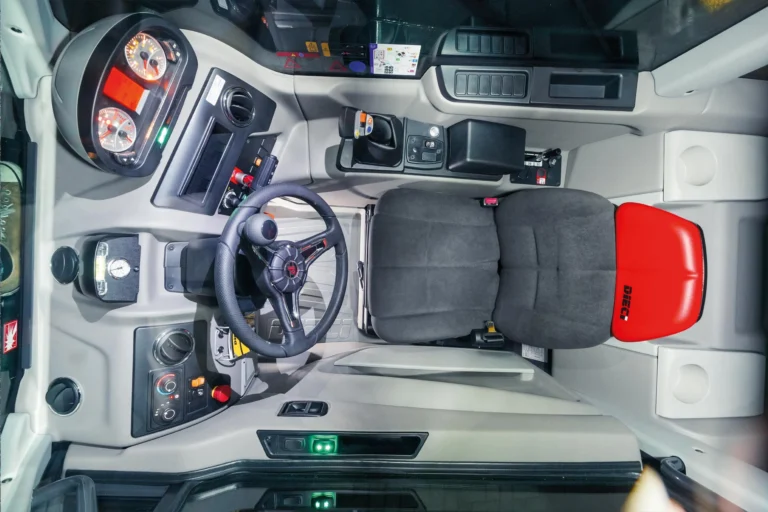
- In-cab diagnostics and LMI displays
- Optional operator assist features
Every Dieci comes with machine-specific load charts, and our dealer network supports training, servicing, and inspection planning across Australia.
Need Help Reviewing Your Site Safety?
Whether you’re buying your first machine or auditing a fleet, we can help assess risk and recommend compliant equipment and processes.
- Book a site safety consultation
- Find your local service expert
- Download the Telehandler Buyer’s Guide
Social caption:
Telehandler safety isn’t just about having the right gear. It’s about how it’s used, what it lifts, and where it rolls. Here’s how to manage stability, load, and operator risk on site.