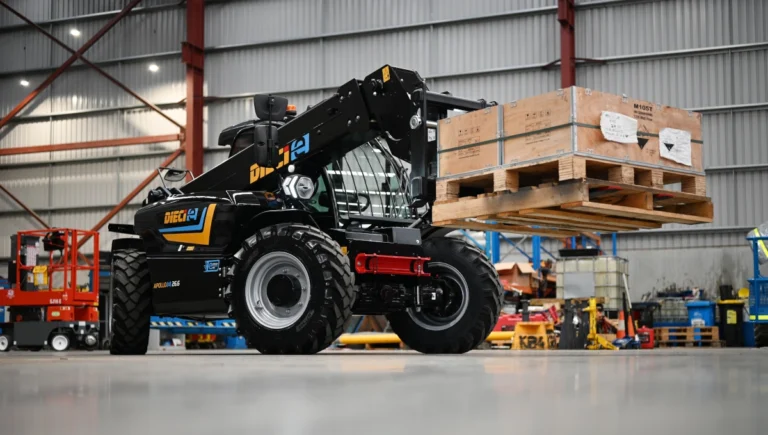
One of the greatest advantages of a telehandler is its versatility. By changing attachments, a single machine can perform a wide range of lifting, loading and material handling tasks across construction, agriculture, mining, infrastructure and industrial applications.
Whether you’re moving pallets, lifting suspended loads, handling hay bales or carrying bulk materials, selecting the right attachment can significantly improve productivity, efficiency and job site safety.
Below is a guide to some of the most common telehandler attachments and the applications they’re designed for.
Fork Tines
Fork tines are the most widely used telehandler attachment and are considered the standard configuration for general material handling.
Designed for lifting palletised loads, fork tines allow operators to transport building materials, equipment, machinery, pallets of bricks, bagged products and countless other loads quickly and efficiently.
Common applications include:
- Loading and unloading trucks
- Moving palletised materials
- Warehouse operations
- Construction sites
- Industrial facilities
- General material handling
Fork tines provide exceptional versatility and are suitable for many everyday lifting tasks.
Fork Positioners
Fork positioners allow operators to hydraulically adjust the spacing between fork tines without leaving the cab.
This enables faster handling of different pallet sizes while reducing manual adjustments and improving operator efficiency.
Fork positioners are particularly valuable where multiple pallet widths are handled throughout the day.
Ideal for:
- Warehousing
- Distribution centres
- Manufacturing facilities
- Construction sites with varying pallet sizes
- Frequent material handling operations
Fork Slippers
Fork slippers are extensions that fit securely over standard fork tines to increase fork length when handling oversized or unusually long loads.
They provide additional support for large or awkward materials that would otherwise extend beyond the standard forks.
Common uses include:
- Structural steel
- Timber packs
- Formwork
- Long building materials
- Oversized pallet loads
Operators should always ensure the attachment and load remain within the telehandler’s rated lifting capacity.
Hay Forks
Hay forks are specifically designed for agricultural applications and allow operators to safely handle hay and straw bales with minimal damage.
Depending on the configuration, they can be used for both round and square bales.
Typical applications:
- Hay handling
- Straw storage
- Livestock feeding
- Agricultural operations
- Fodder transport
Hay forks provide farmers with a simple and efficient solution for everyday bale handling.
Buckets
Buckets transform a telehandler into a highly capable loading and material handling machine.
Available in various capacities and configurations, buckets are suitable for handling loose materials including:
- Soil
- Sand
- Gravel
- Mulch
- Grain
- Fertiliser
- Compost
- General bulk materials
They are commonly used across agriculture, construction and civil infrastructure projects.
Jibs
Jibs extend the lifting capability of a telehandler by providing a central lifting point for suspended loads.
Rather than supporting loads on forks, a jib allows operators to lift items using slings or chains, making it suitable for more specialised lifting applications.
Common applications:
- Steel erection
- Precast concrete installation
- Machinery placement
- Plant installation
- Construction materials
- Infrastructure projects
Jibs offer increased flexibility where precision lifting is required.
Rotators
Rotators allow an attachment to rotate hydraulically, giving operators greater control over load positioning.
This is particularly useful when materials need to be accurately aligned or emptied without repositioning the entire machine.
Typical uses:
- Bulk material handling
- Waste management
- Recycling operations
- Industrial processing
- Precision load placement
Rotators improve both productivity and accuracy when handling specialised loads.
Rhino Hooks
Rhino hooks provide a heavy-duty lifting point for suspended loads while offering greater strength and capacity than many standard lifting hooks.
Designed for demanding lifting applications, Rhino hooks are commonly used across construction, mining and industrial environments.
Suitable for:
- Heavy equipment
- Concrete products
- Steel components
- Industrial lifting
- Infrastructure works
They provide a robust solution where secure suspended lifting is required.
Bale Clamps
Bale clamps allow operators to securely grip and transport wrapped hay or silage bales without puncturing or damaging the wrapping.
Maintaining bale integrity helps preserve feed quality while reducing unnecessary waste.
Common agricultural applications:
- Silage handling
- Wrapped hay bales
- Feed storage
- Livestock operations
Bale clamps offer a practical solution where protecting wrapped bales is essential.
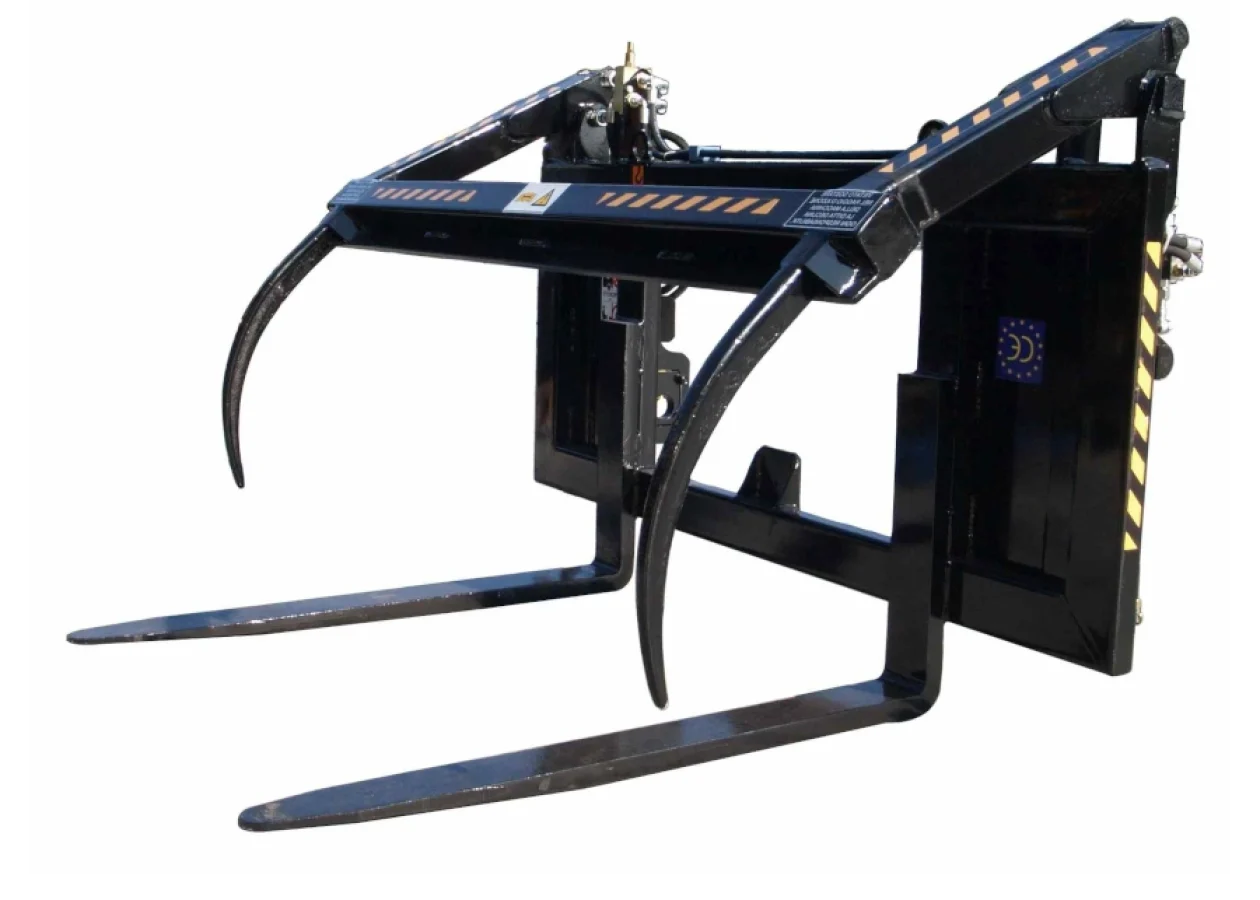
Log Grabs
Log grabs are purpose-built for safely handling timber, logs and other cylindrical materials.
The hydraulic grab securely clamps the load, allowing operators to lift, transport and position timber with confidence.
Common industries include:
- Forestry
- Sawmills
- Landscaping
- Agriculture
- Timber processing
Log grabs improve both efficiency and operator safety when handling irregular loads.
Winches
A telehandler winch converts the machine into a versatile lifting solution for suspended loads that require controlled vertical movement.
Rather than lifting on forks, the winch allows operators to raise and lower loads using a wire rope system.
Typical applications:
- Mechanical services
- Steel erection
- Plant installation
- Industrial maintenance
- Construction projects
Winches are ideal where controlled lifting and precise placement are required.
EWP Man Baskets
Elevating Work Platform (EWP) man baskets allow authorised personnel to safely access elevated work areas using a compatible telehandler.
These platforms are commonly used for inspection, maintenance and installation work where temporary elevated access is required.
Typical applications:
- Building maintenance
- Electrical work
- Industrial shutdowns
- Facility maintenance
- Construction finishing works
Operators must always ensure the telehandler is approved for personnel lifting, the work platform complies with relevant Australian Standards, and all applicable safety procedures and regulations are followed.
Maximising the Versatility of Your Telehandler
The ability to quickly change attachments is one of the reasons telehandlers have become indispensable across so many industries.
Rather than investing in multiple specialised machines, businesses can equip a single telehandler with a range of attachments suited to different applications throughout the day.
From pallet handling and suspended lifting through to agricultural operations and elevated access, selecting the right attachment enables operators to maximise productivity while making full use of their machine’s capabilities.
Telehandler Attachments from Dieci Australia
Dieci Australia offers a comprehensive range of telehandler attachments designed to maximise the versatility of its machines across construction, agriculture, mining, infrastructure and industrial applications.
Whether you require pallet handling, bulk material movement, suspended lifting or specialised agricultural attachments, choosing the correct attachment helps ensure your telehandler delivers safe, efficient and productive performance for every job.