How to Choose the Best Telehandler for Your Job Site
Choosing the right telehandler is about more than selecting the machine with the highest lifting capacity or greatest reach. The best telehandler is the one that matches the loads you need to handle, the height and distance you need to reach, the conditions of your job site and the attachments required to complete the work safely and efficiently.
With telehandlers available in a wide range of sizes and configurations, selecting the right machine can have a significant impact on productivity, operating costs and long-term performance.
Whether you’re working on a commercial construction site, civil infrastructure project, mining operation or industrial site, there are several important factors to consider before choosing your next telehandler.
1. Start With the Loads You Need to Handle
The first question should always be: what do you need the telehandler to lift?
Consider the heaviest loads the machine will handle, rather than simply looking at the average load. Pallets of building materials, structural steel, concrete products, formwork and other heavy materials can all have very different weight and handling requirements.
It is also important to remember that a telehandler’s maximum rated capacity doesn’t apply in every operating position. As the boom extends and raises, the machine’s available lifting capacity changes. The load chart provides the critical information about what the machine can safely lift at different boom angles, heights and forward reaches.
For this reason, choosing a telehandler based solely on its headline maximum capacity can result in either an underspecified machine that cannot complete the required lifts or an unnecessarily large machine that costs more to purchase and operate.
Choose the machine based on the heaviest and most demanding lift you actually need to perform.
2. Consider Lift Height and Forward Reach
Capacity is only part of the equation. You also need to consider how high and how far forward the machine needs to place the load.
A telehandler used to unload materials from a truck may have very different requirements from one placing materials onto upper levels of a construction project.
Ask yourself:
- What is the maximum height you need to reach?
- How far forward does the load need to be placed?
- Will the machine need to reach over walls, slabs or other obstacles?
- How much capacity is required at maximum reach?
- How frequently will the machine operate at height or full extension?
A machine may have an impressive maximum lift height, but that doesn’t mean it can carry your required load to that height. The load chart needs to be assessed at the actual working height and reach.
This is one of the most important considerations when comparing telehandlers.
3. Match the Machine to Your Job Site
The physical characteristics of your site can be just as important as the lifting requirements.
A large telehandler may provide excellent lifting performance, but it isn’t necessarily the best choice for a congested construction site with restricted access.
Consider:
Machine width: Will the telehandler fit through gates, between structures or around existing infrastructure?
Overall height: Can it operate beneath doorways, structures, powerlines or other overhead restrictions?
Turning radius: How easily can the machine manoeuvre around buildings, materials and other equipment?
Ground conditions: Will it be working on compacted surfaces, uneven ground, slopes, mud, gravel or rough terrain?
Site congestion: Will the operator need to manoeuvre around other trades, vehicles and machinery?
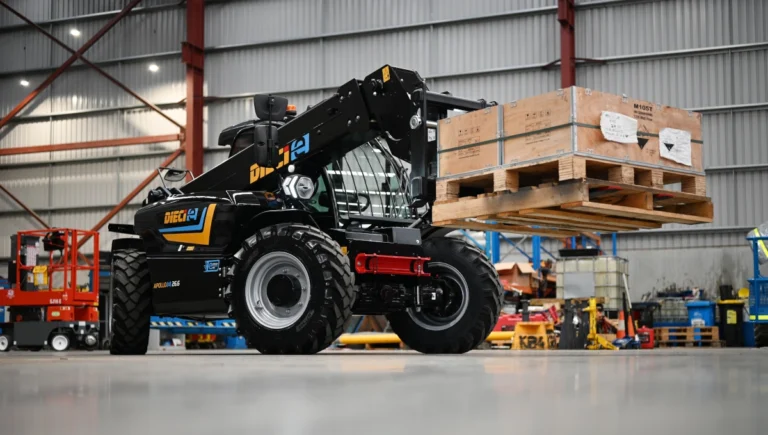
For confined construction sites, a compact telehandler can provide a major productivity advantage. Dieci’s compact range includes machines such as the Apollo Smart 20.4, which combines a 2,000 kg lifting capacity with a 4.35 m maximum lift height in a compact package.
For larger projects, a higher-capacity telehandler may be more appropriate.
4. Fixed Boom or Rotating Telehandler?
One of the biggest decisions is whether you need a fixed boom telehandler or a rotating telehandler.
Fixed Boom Telehandlers
Fixed boom telehandlers are a versatile choice for general materials handling. They are particularly well suited to construction, civil works, agriculture, industrial applications and general site operations.
They can be fitted with a wide range of attachments and are ideal for tasks such as:
- Moving pallets and building materials
- Loading and unloading trucks
- Handling formwork
- Moving bulk materials
- Placing materials at height
- General site material handling
Dieci Australia’s fixed boom range covers machines from compact 2–7 tonne models through to heavy-duty machines in the 13–23 tonne class, allowing the machine to be matched to a wide variety of applications.
Rotating Telehandlers
A rotating telehandler can be the better option when you need greater working coverage, high lift heights or the ability to position loads without continually repositioning the machine.
Dieci Pegasus rotating telehandlers combine telescopic reach with turret rotation and can be configured for applications involving material handling, crane work and elevated access. Depending on the model, the Pegasus range provides substantial lift capacity and working heights, including models capable of reaching around 20 metres.
For construction projects where the machine needs to service a large working area from a single position, a rotating telehandler can significantly reduce repositioning and improve productivity.
5. Don’t Overlook the Attachments
A telehandler’s versatility comes from its attachments.
Fork tines may be the standard configuration, but the same machine can potentially be equipped with attachments such as:
- Fork positioners
- Fork extensions and slippers
- Buckets
- Jibs
- Rhino hooks
- Rotators
- Log grabs
- Bale clamps
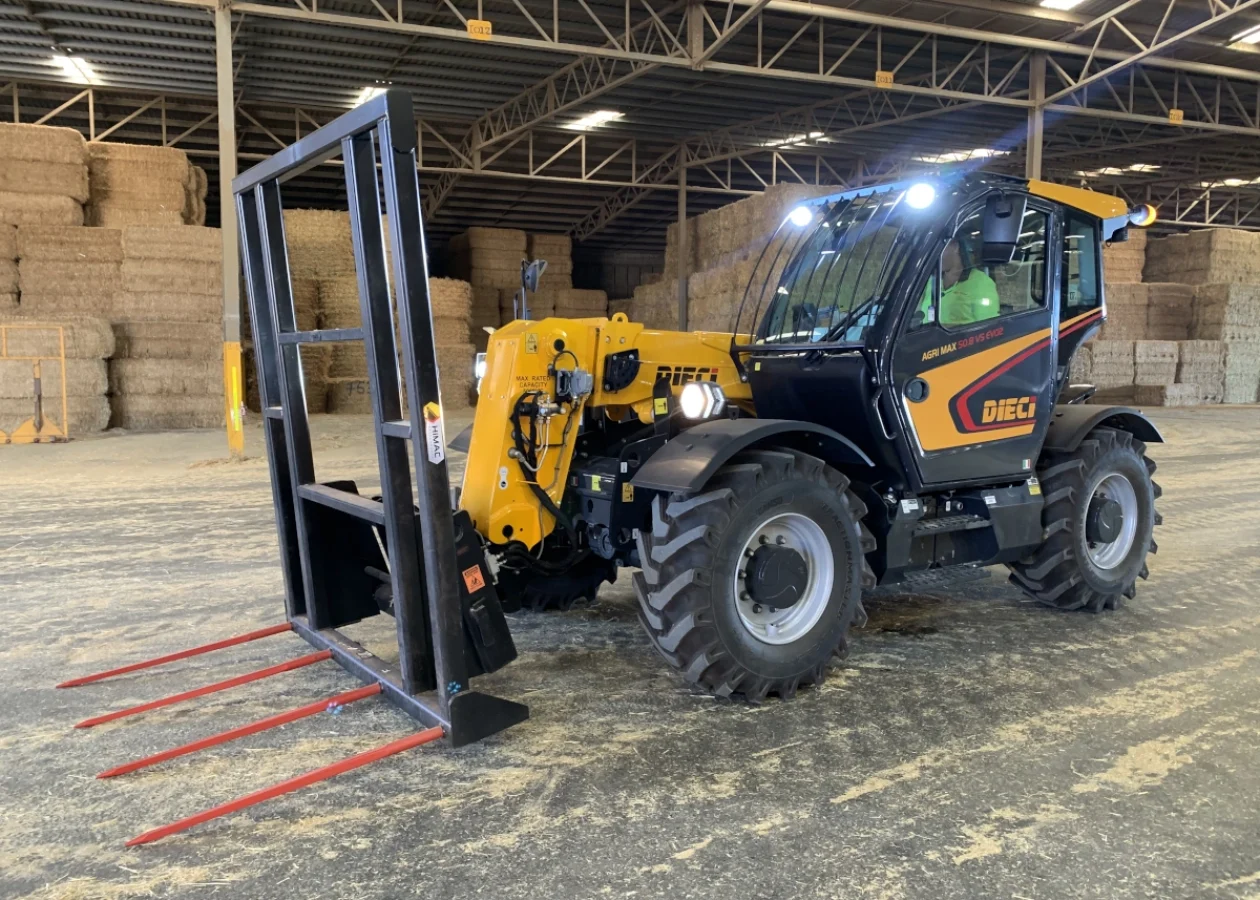
- Hay forks
- EWP work platforms
- Winches
- Specialist attachments
The right attachment can transform a telehandler from a basic materials-handling machine into a highly versatile piece of site equipment.
However, attachments also affect machine performance. Their weight, dimensions and load position can change the telehandler’s available capacity and stability.
That’s why you should select the machine and attachment as a complete package rather than choosing the telehandler first and trying to determine compatibility later.
Always check the appropriate load chart for the specific attachment and configuration you intend to use.
6. Think About Hydraulics and Cycle Times
Hydraulic performance has a direct impact on how quickly a telehandler can complete repetitive tasks.
If the machine will spend much of the day lifting, lowering, extending and retracting the boom, hydraulic response and flow rate can make a noticeable difference to productivity.
A well-designed hydraulic system should provide smooth and predictable control while allowing the operator to perform multiple functions efficiently.
Dieci’s telehandlers incorporate technologies including load-sensing hydraulics and flow-sharing hydraulic systems designed to improve control and allow multiple boom functions to be operated simultaneously.
For high-frequency materials handling, these details can be just as important as the headline engine power or maximum lift capacity.
7. Consider Manoeuvrability and Steering
Construction and industrial sites rarely provide unlimited space.
Different steering configurations can make a significant difference to how easily a telehandler can work in confined areas. Depending on the model, telehandlers can offer different steering modes such as:
- 2-wheel steering for conventional road-style operation
- 4-wheel steering for a tighter turning circle
- Crab steering for moving diagonally across a site
The ability to select the appropriate steering mode can make it easier to position the machine accurately, particularly around buildings, structures and other equipment.
8. Operator Environment Matters
A telehandler’s performance ultimately depends on the person operating it.
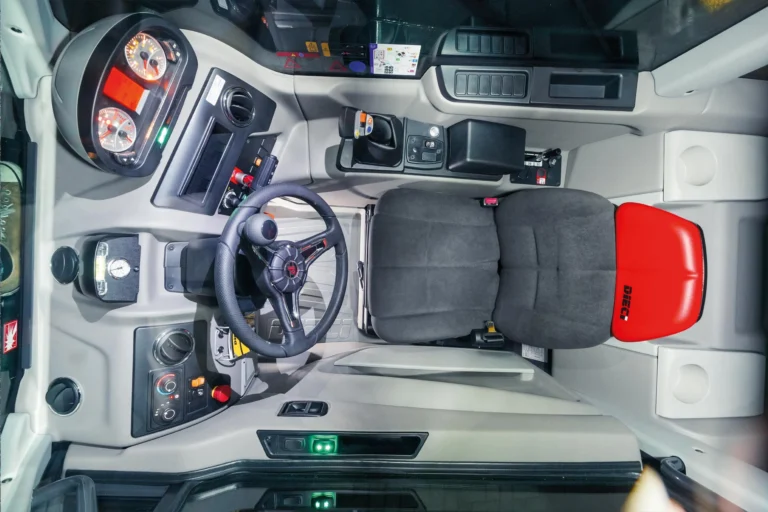
If the machine is going to work long shifts, operator ergonomics should be considered alongside lifting performance. Visibility, seat adjustment, steering position, control layout, noise levels and climate control can all affect operator comfort and fatigue.
Good visibility is particularly important when positioning loads at height or working in busy construction environments.
An intuitive control layout can also reduce unnecessary operator movements and make repetitive tasks easier to perform consistently.
9. Consider Reliability and Total Cost of Ownership
The purchase price is only one part of the cost of owning a telehandler.
A machine that costs less initially may not necessarily represent better value if it experiences greater downtime, requires frequent repairs or has limited parts availability.
When comparing machines, consider:
- Build quality
- Component durability
- Service intervals
- Parts availability
- Local technical support
- Warranty coverage
- Fuel or energy efficiency
- Operator productivity
- Resale value
Reliability becomes particularly important on remote projects where equipment downtime can quickly disrupt schedules and increase costs.
Dieci Australia supports its telehandler range through branches in Sydney, Melbourne, Brisbane and Perth, together with a nationwide network of parts and service agents covering metropolitan, regional and rural Australia.
10. Consider the Environment the Machine Will Work In
The best telehandler for a metropolitan construction site may not be the best machine for an underground project, agricultural operation or remote infrastructure site.
Think about the environment as well as the task.
For example, electric telehandlers can be particularly useful where low noise and reduced emissions are important. Dieci’s Apollo-e 26.6 provides a 2,600 kg lifting capacity and 5.73 m maximum lift height in an electric configuration, making it suitable for applications where quiet, low-emission operation is beneficial.
For demanding mining and construction applications, larger fixed boom or rotating telehandlers may be more appropriate depending on the required lifting capacity, reach and site conditions.
Don’t Choose a Telehandler Based on One Specification
One of the biggest mistakes when selecting a telehandler is comparing machines using a single number.
Maximum lift capacity doesn’t tell you everything.
Neither does maximum lift height.
Neither does engine power.
The right machine is determined by how these specifications work together in the conditions where the machine will actually operate.
A 4-tonne telehandler may be perfect for one application but completely unsuitable for another if the required load needs to be placed at maximum reach. Likewise, buying a much larger machine than necessary can increase purchase costs, transport requirements, fuel consumption and operating costs without delivering a meaningful productivity benefit.
The goal is to find the smallest machine that comfortably meets your actual requirements, with enough capacity and performance to handle the most demanding tasks safely.
Choosing the Right Dieci Telehandler
Dieci Australia offers one of the broadest telehandler ranges available to Australian industries, with machines spanning approximately 2 to 23 tonnes of lifting capacity and lift heights from around 4.35 to 25 metres. The range includes compact fixed boom machines, heavy-duty telehandlers, rotating Pegasus models, electric telehandlers and specialised machines for construction, mining, agriculture and infrastructure.
That range makes it possible to select a telehandler based on the actual requirements of the job rather than compromising with a machine that is too small, too large or poorly suited to the application.
Before choosing a model, consider your maximum load, required lift height, forward reach, attachments, site access, ground conditions, operating environment and expected workload. Then use the relevant load charts to confirm that the machine can safely perform your most demanding lifts.
Need Help Choosing the Right Telehandler?
Choosing the right telehandler doesn’t have to be complicated. Dieci Australia can help you match the machine, attachment and specification to your specific application, whether you’re working in construction, civil infrastructure, mining, agriculture or industrial operations.
With a nationwide sales, parts and service network, Dieci Australia provides support throughout the life of your machine.
Contact Dieci Australia to discuss your requirements and find the right telehandler for your job site.
Frequently Asked Questions About Choosing a Telehandler
How do I choose the right size telehandler?
Choose a telehandler based on the heaviest load you need to lift, the height and forward reach required, and the conditions of your job site. It is important to check the machine’s load chart rather than relying solely on its maximum lifting capacity, as available capacity decreases as the boom extends and rises. The right telehandler should comfortably handle your most demanding lifts without being unnecessarily oversized for the job.
What is the difference between a fixed boom and rotating telehandler?
A fixed boom telehandler is generally suited to general materials handling, construction, civil works and industrial applications, while a rotating telehandler provides greater working coverage by allowing the turret and boom to rotate. Rotating telehandlers are particularly useful on construction sites where materials need to be placed at height or reach and the machine needs to service a large working area without constant repositioning.
What attachments can be used with a telehandler?
Telehandlers can be fitted with a wide range of attachments, including fork tines, fork positioners, buckets, jibs, hooks, winches, rotators, work platforms and specialist attachments. The correct attachment depends on the task being performed. Attachment weight and load position can affect the telehandler’s lifting capacity, so the appropriate load chart should always be checked for the specific attachment and configuration.
What lift height do I need from a telehandler?
The required lift height depends on where the load needs to be placed, not simply the height of the building or structure. You should also consider the required forward reach and the load that must be carried at that position. A telehandler’s maximum lift height does not mean it can lift its maximum rated load to that height, so both height and capacity should be considered together using the manufacturer’s load chart.
Are larger telehandlers always better?
No. A larger telehandler may offer greater capacity and reach, but it can also increase purchase or hire costs, fuel consumption, transport requirements and the space needed to manoeuvre on site. The best telehandler is the machine that provides sufficient capacity and reach for your most demanding tasks while remaining appropriately sized for the working environment.