Why Telehandler Lifting Capacity Changes With Reach and Height
When choosing a telehandler, one of the first specifications people look at is its maximum lifting capacity. A machine rated to lift 5,000kg, for example, might seem capable of handling any load up to that weight. However, telehandler lifting capacity is not quite that straightforward.
A telehandler’s maximum rated capacity is only achievable under specific operating conditions. As the boom extends further out or raises higher, the amount of weight the machine can safely lift changes. Understanding why this happens is essential when selecting the right telehandler and operating it safely.
Understanding Telehandler Load Capacity
Every telehandler has a maximum rated lifting capacity, but this figure represents the machine’s capacity under particular conditions rather than a limit that applies across every boom position.
The amount a telehandler can lift depends on several factors, including:
The weight of the load being lifted
How far the load is positioned from the machine
The height the load needs to be lifted
The boom extension and angle
The attachment being used
The machine’s configuration and stabiliser position, where applicable
These factors influence the machine’s stability and the forces acting on its boom and chassis.
Why Lifting Capacity Decreases as Reach Increases
One of the most important principles of telehandler operation is that lifting capacity generally decreases as horizontal reach increases.
This comes down to leverage. When a load is positioned close to the machine, its weight acts relatively close to the telehandler’s centre of gravity. As the boom extends, the same load is positioned further away, increasing the overturning force acting on the machine.
For example, a telehandler might be rated to lift 5,000kg with the boom retracted and the load positioned close to the machine. However, when the boom is extended horizontally, its safe lifting capacity may be considerably lower.
This is why maximum lifting capacity and maximum horizontal reach should never be considered independently when choosing a telehandler.
How Lifting Height Affects Capacity
Lifting height also influences how much weight a telehandler can safely handle.
As the boom raises, the load’s position changes and the machine’s load chart determines the permitted capacity at that particular boom angle and extension. Depending on the machine, its configuration and the load position, the available lifting capacity may decrease significantly at greater heights.
This is particularly important for applications such as construction, industrial materials handling and agricultural operations, where loads may need to be placed on elevated structures or stacked at considerable heights.
A telehandler’s maximum lifting height does not necessarily mean it can lift its maximum rated load to that height. Buyers should always check the machine’s load chart to understand the capacity available at the required working height.
What Is a Telehandler Load Chart?
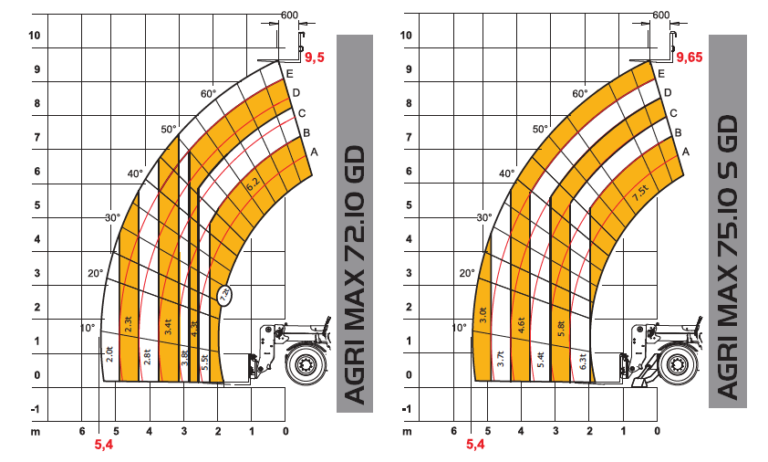
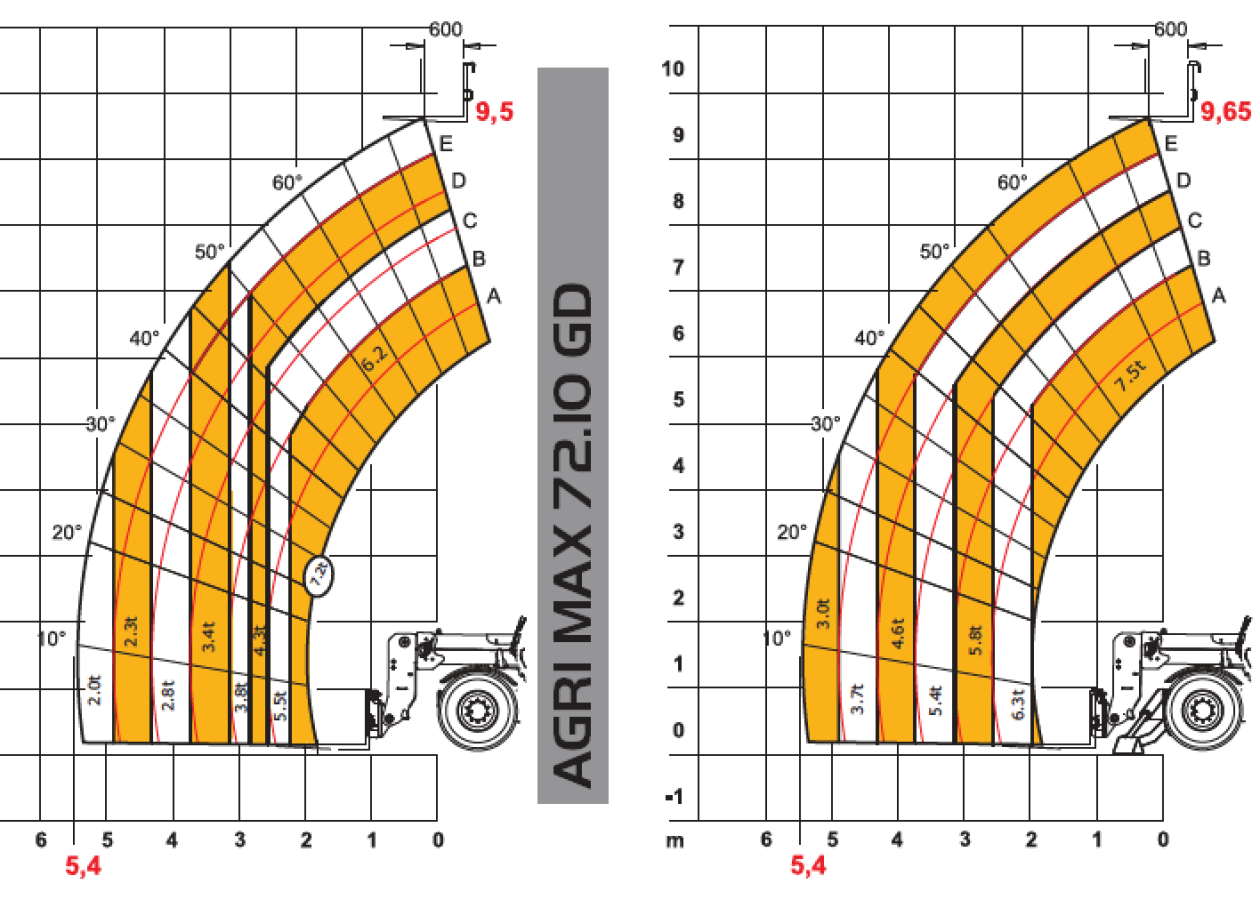
A load chart is one of the most important documents supplied with a telehandler. It shows the machine’s permitted lifting capacity at different boom positions, allowing operators to determine whether a particular load can be safely handled.
Load charts typically take into account:
Horizontal reach
Lifting height
Boom extension
Load weight
Machine configuration
Stabiliser position, where applicable
Rather than relying solely on the maximum capacity printed in a machine’s specifications, operators should use the load chart to confirm the permitted capacity for the exact lifting operation.
It is also important to use the correct load chart for the machine and attachment being operated. Different attachments can affect the load’s position and the machine’s rated capacity.
Why Choosing the Right Telehandler Matters
Understanding the relationship between lifting capacity, reach and height is essential when selecting a telehandler for your operation.
A machine with a higher maximum lifting capacity is not automatically the best choice. The more important consideration is whether it can handle the loads you need to lift at the heights and distances required by your work.
For example, a business regularly lifting heavy materials close to ground level may have very different requirements from a construction operation placing materials on upper floors or an agricultural business stacking large bales.
When comparing telehandlers, consider:
Maximum lifting capacity: The heaviest loads the machine is designed to handle under specified conditions.
Maximum lifting height: The highest point the machine can reach.
Maximum horizontal reach: How far the machine can position a load away from its chassis.
Capacity at maximum height: How much weight the machine can lift when the boom is fully raised.
Capacity at maximum reach: How much weight it can handle when the boom is extended horizontally.
Looking at these specifications together provides a much clearer picture of a machine’s actual capabilities.
Find the Right Dieci Telehandler for Your Requirements
Dieci offers a comprehensive range of telehandlers designed for different lifting capacities, working heights and applications. From versatile fixed-boom machines to high-capacity and rotating telehandlers, choosing the right model starts with understanding the demands of your operation.
The Dieci Australia team can help you compare models, understand their lifting characteristics and identify a machine suited to your required load weights, working heights and horizontal reach.
Explore the Dieci telehandler range or contact Dieci Australia to discuss the right machine for your requirements.
To discuss which telehandler model best suits your job sites, or to arrange a demonstration, contact the team on 1300 888 479 or visit dieciaustralia.com.au.
Telehandler Lift Capacity vs Reach FAQs
Why does a telehandler's lifting capacity decrease as the boom extends?
As the boom extends, the load moves further away from the machine’s centre of gravity, increasing the overturning force. This means the telehandler’s safe lifting capacity generally decreases as horizontal reach increases.
Can a telehandler lift its maximum rated capacity at maximum height?
Not necessarily. Maximum rated capacity is usually only achievable under specific boom positions and operating conditions. The available capacity at maximum height depends on the machine’s design and must be checked using its load chart.
What is a telehandler load chart used for?
A load chart shows the maximum permitted lifting capacity at different boom heights and horizontal reaches. Operators use it to determine whether a particular load can be safely lifted and positioned at the required distance and height.
Does using different attachments affect telehandler lifting capacity?
Yes. Attachments can change the weight and position of the load, affecting the machine’s available lifting capacity. Always use the appropriate load chart for the machine and attachment combination.
What should I consider when choosing a telehandler's lifting capacity?
Consider the weight of the loads you need to handle, how high they must be lifted and how far they need to be positioned from the machine. Maximum lifting capacity alone is not enough; check the load chart to ensure the telehandler can handle your typical loads at the required reach and height.