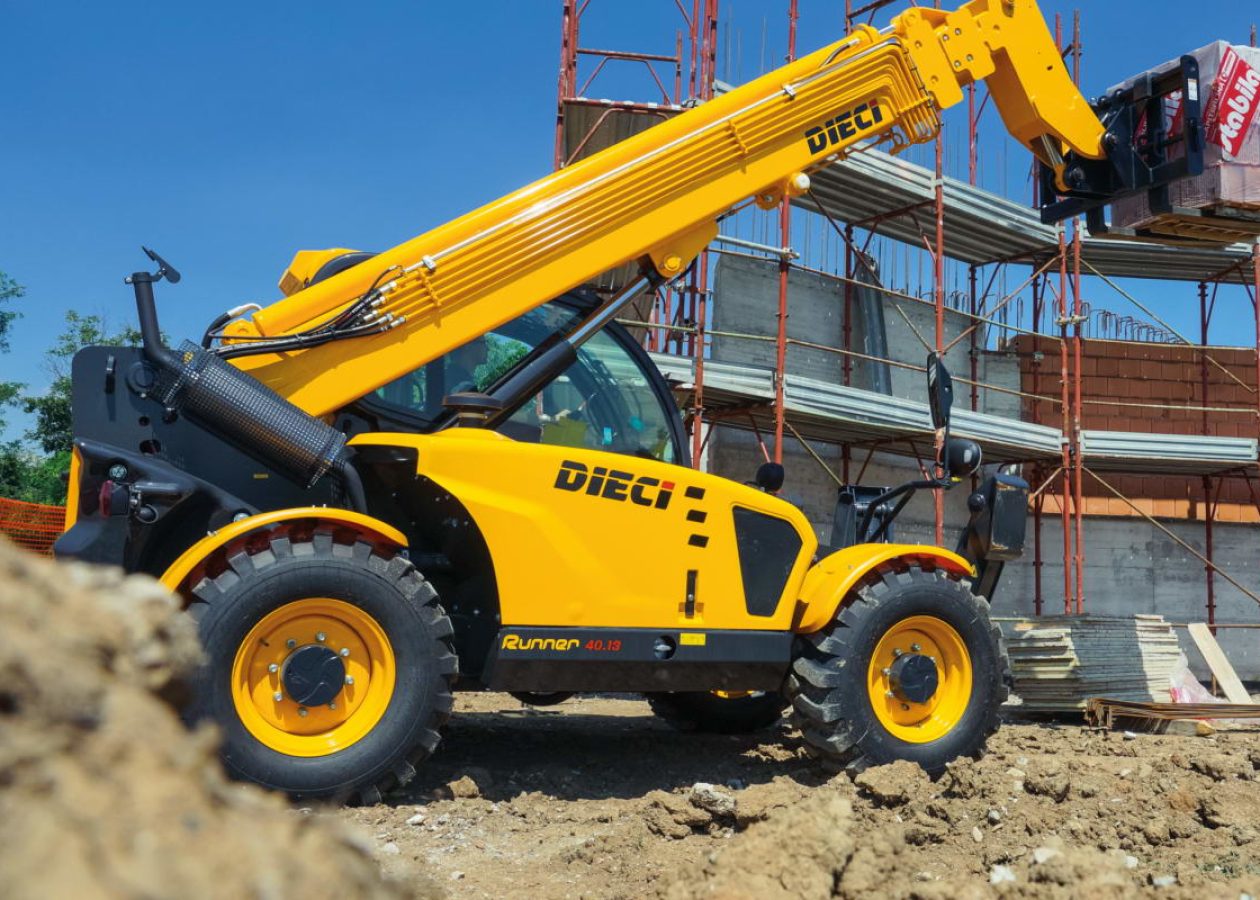
Modern construction sites are under constant pressure to improve productivity, reduce downtime and make better use of available equipment. Having a machine that can perform multiple tasks can make a significant difference to the efficiency of a project.
This is where the telehandler comes into its own.
Combining the lifting capabilities of a forklift with the reach and versatility of a telescopic boom, telehandlers can be used for a wide range of applications across construction, agriculture, infrastructure, mining and industrial projects.
With the right attachment, a telehandler can go from moving pallets and materials to lifting loads, handling bulk materials and even providing access to elevated work areas.
One Machine, Multiple Applications
The biggest advantage of a telehandler is its ability to perform different jobs using a single machine.
A conventional forklift is highly effective at moving palletised materials, but its capabilities are generally limited by its configuration. A telehandler takes this concept considerably further by combining a telescopic boom with a range of interchangeable attachments.
Depending on the attachment fitted, a telehandler can be used for:
- Moving pallets and building materials
- Loading and unloading trucks
- Placing materials at height
- Handling bulk materials
- Lifting and positioning heavy loads
- Moving soil, gravel and other loose materials
- Supporting construction and infrastructure projects
- Working with specialised attachments for specific applications
This flexibility means one telehandler can potentially perform tasks that would otherwise require several different pieces of equipment.
The Power of Attachments
The versatility of a telehandler comes largely from its ability to use different attachments.
Forks are one of the most common attachments and allow the telehandler to perform traditional forklift duties. However, this is only the beginning of what the machine can do.
Buckets can be used for handling loose materials such as soil, sand, gravel and waste, making the telehandler useful for loading, stockpiling and general material handling.
Jibs, hooks and other lifting attachments can transform the telehandler into a highly capable lifting machine, allowing operators to pick up and accurately position loads that may be difficult to handle with conventional equipment.
For applications requiring personnel access, approved work platforms can provide an elevated working position for suitable tasks.
The result is a machine that can be configured around the job rather than forcing the job to be built around a single machine configuration.
Reach Makes a Major Difference
Unlike a conventional forklift, a telehandler can extend its boom forward and upward, allowing operators to place loads in areas that may be difficult or impossible to reach with standard lifting equipment.
This makes telehandlers particularly useful on construction sites where materials often need to be placed on upper floors, platforms, roofs or across obstacles.
The combination of lift capacity, reach and manoeuvrability gives operators considerably more flexibility when handling materials around a busy site.
Ideal for Construction Sites
Construction is one of the environments where the multi-purpose nature of a telehandler is particularly valuable.
A single machine may be required to unload deliveries in the morning, transport materials around the site during the day and place materials at height later in the project.
Instead of bringing several specialised machines onto the site, a suitably equipped telehandler can perform multiple roles.
This can help reduce the amount of equipment required on site while also simplifying logistics, operator requirements and equipment management.
Improving Site Efficiency
Every additional machine on a worksite brings additional considerations, including transportation, maintenance, storage and operator requirements.
Using a versatile machine for multiple applications can help reduce some of these logistical challenges.
A telehandler can move around the site under its own power and, depending on the model and application, transition between different tasks by changing attachments.
This means contractors can have a machine available that is capable of adapting as the requirements of the project change.
A Telehandler That Adapts to the Job
Not every project requires the same equipment. Ground conditions, lifting requirements, working heights and the materials being handled can all change throughout the life of a project.
The ability to change attachments gives telehandlers a level of adaptability that few other machines can match.
For example, a contractor may use forks for general material handling, switch to a bucket for loose materials and then use a lifting attachment for more specialised load-handling tasks.
Rather than being limited to one specific function, the telehandler becomes a versatile platform that can be configured to suit the work at hand.
Dieci Telehandlers: Built for Versatility
Dieci has developed a comprehensive range of telehandlers designed to meet the needs of demanding industries and applications.
From compact machines suited to restricted sites through to high-capacity and rotating telehandlers designed for demanding lifting applications, the Dieci range provides solutions for a wide variety of requirements.
Dieci telehandlers can be equipped with a broad selection of attachments, allowing operators to get significantly more functionality from a single machine.
Whether the job involves moving materials, lifting loads, reaching elevated positions or handling bulk materials, the right Dieci telehandler can provide the versatility required to get the job done.
One Machine Can Do More
The modern telehandler is much more than a forklift with a telescopic boom. Its combination of reach, lifting capability, manoeuvrability and interchangeable attachments makes it one of the most versatile machines available to today’s construction and industrial sectors.
For contractors looking to maximise equipment utilisation and reduce the number of machines required on site, a telehandler can provide an efficient and highly adaptable solution.
Want to find out which Dieci telehandler is right for your application? Contact Dieci Australia to discuss your requirements and explore the range of telehandlers and attachments available.
Frequently Asked Questions About Telehandlers
What can a telehandler be used for?
Telehandlers can be used for a wide range of tasks including moving and placing materials, loading and unloading trucks, lifting loads to height, handling bulk materials and transporting materials around a worksite. With the right attachment, a telehandler can perform many different functions beyond traditional material handling.
Can a telehandler replace a forklift?
In many applications, yes. A telehandler fitted with forks can perform many of the same material handling tasks as a conventional forklift, while offering the added benefit of telescopic reach. However, the most suitable machine depends on the specific application, load requirements, operating environment and site conditions.
What attachments can be used with a Dieci telehandler?
Dieci telehandlers can be fitted with a wide range of attachments, including forks, buckets, jibs, hooks, winches and approved work platforms. The available attachments vary depending on the telehandler model and application, allowing the machine to be configured for different tasks.
Can telehandlers be used for lifting and placing materials at height?
Yes. One of the key advantages of a telehandler is its ability to extend its boom both upwards and forwards. This allows operators to lift and accurately position materials at significant heights and reach areas that may be inaccessible to conventional forklifts.
Why are telehandlers useful on construction sites?
Telehandlers are particularly useful on construction sites because they can perform multiple tasks using different attachments. A single machine can move materials, unload deliveries, handle bulk materials and place loads at height. This versatility can reduce the need for multiple specialised machines and help improve productivity and efficiency on site.