Choosing the Right Telehandler Attachments for Your Worksite
When it comes to efficiency on a construction site, one machine rarely does it all—unless it’s equipped for it. That’s why telehandlers are so highly valued in Australian worksites: their versatility is unmatched. But how do you know which attachment is right for the job?
Have you ever found yourself switching between machines just to complete simple tasks? Or worse, trying to make do with the wrong tool for the job? The right telehandler attachment not only saves time but also improves safety, productivity, and return on investment.
Quick Guide: Most Useful Telehandler Attachments
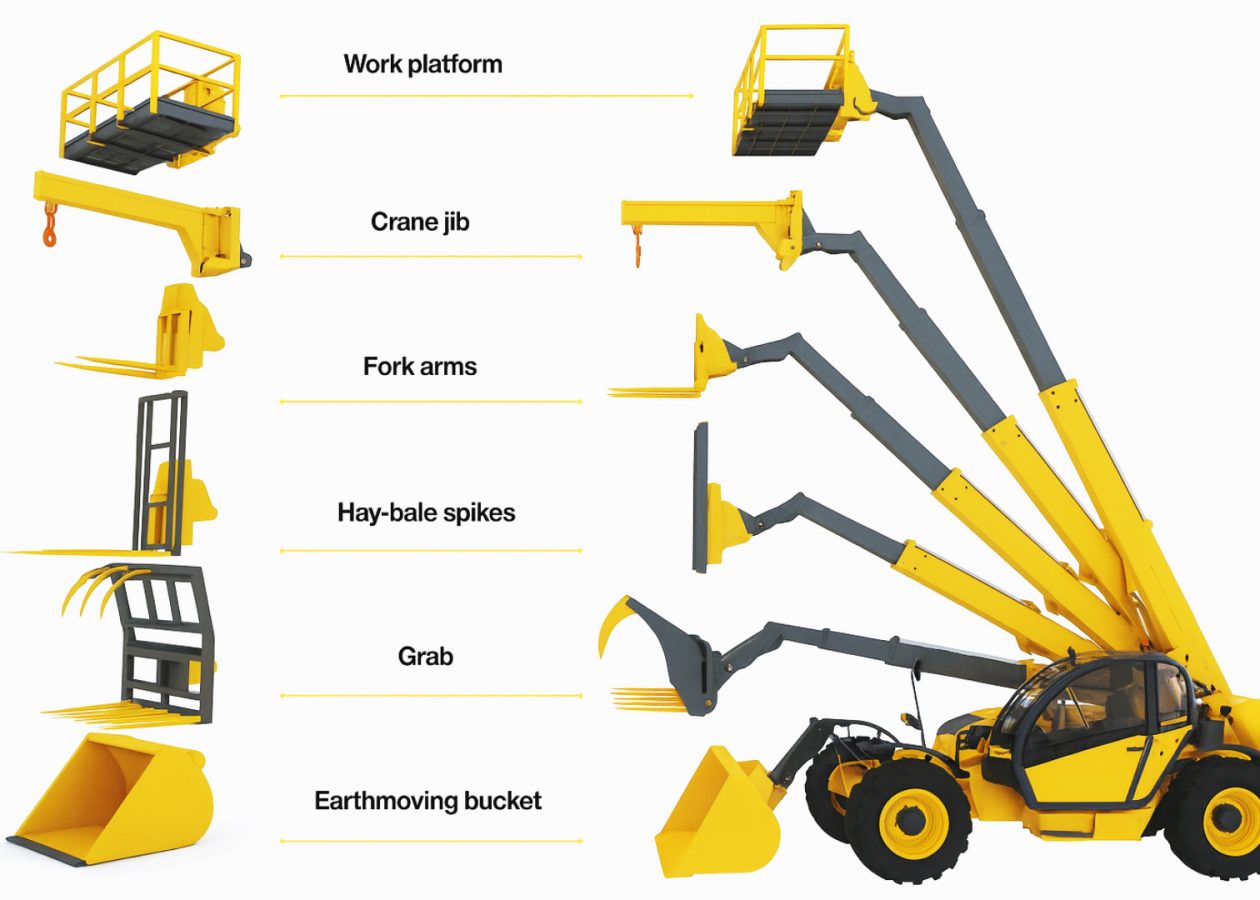
The best telehandler attachments for worksite efficiency include:
- Pallet forks for lifting pallets and transporting materials
- Buckets for loading, moving, or dumping bulk materials
- Jibs and lifting hooks for lifting heavy, awkward loads
- Work platforms for safe elevated access
- Sweepers for site cleanup and maintenance
- Augers and trenchers for drilling and trenching tasks
- Concrete mixers for compact concrete handling on-site
- Hay clamps and bale grabs for agricultural material handling
Each of these tools transforms your telehandler from a single-purpose machine into a multi-use asset. Choosing the right attachment can significantly expand your operational flexibility.
Why Attachment Choice Matters More Than You Think
Most people don’t talk about this, but attachment compatibility can make or break a project timeline. The truth is, unless you’ve been on-site trying to manoeuvre a bucket through tight corners or struggling to lift non-standard loads, it’s hard to appreciate how much the right attachment matters.
A poorly chosen attachment can slow down operations, cause equipment strain, or even lead to safety incidents. Conversely, the right attachment can streamline workflow, reduce downtime, and cut costs.
For example, pallet forks might be ideal for warehouses or structured site deliveries, while a work platform attachment is essential for maintenance or elevated inspections. One is not better than the other—they’re just different tools for different needs.
“Top Telehandler Attachments You Should Know”
Need a quick answer? Here are the top telehandler attachments used in Australia:
- Pallet Forks – Great for materials handling
- Buckets – Ideal for bulk and earthmoving
- Jibs/Hooks – Useful for heavy lifting equipment needs
- Work Platforms – Best for elevated site access
These options make your telehandler adaptable to nearly any job.
Matching Attachments to Industry Needs
1. Construction
Heavy lifting equipment like lifting jibs and pallet forks dominate in construction. These allow operators to safely move beams, bricks, scaffolding, and other materials across various terrain types. In urban sites with tight access, rotating telehandlers with compact jibs are particularly valuable.
Buckets are also critical in early-stage construction for moving gravel, sand, and debris. When paired with high-lift telehandlers, they allow rapid loading of dump trucks and hoppers.
2. Agriculture
Farmers often require telehandlers with bale grabs, buckets, and augers for daily operations. Hay clamps are vital for moving wrapped or loose bales, while forks handle feed pallets and crates. The ability to switch between a bucket and a bale spike means fewer machines are needed to get the job done.
Rural operations also benefit from telescopic forklifts for stacking, storing, and loading harvest material. Many use telehandler hire across Australia during seasonal peaks to match demand.
3. Mining & Industrial Sites
Mining environments call for rugged, heavy-duty attachments. Lifting hooks, extended jibs, and specialised maintenance platforms are used to position and service large equipment. Safety is paramount, so attachments must meet strict compliance standards.
Joystick-controlled telehandlers shine here by offering greater control over movements in tight, hazard-prone zones. When downtime costs thousands of dollars per hour, having the right attachments is non-negotiable.
4. Infrastructure & Utilities
In roadworks, utility installs, and telecommunications, attachments like augers, trenchers, and work platforms are frequently used. Being able to drill holes or lift workers into hard-to-reach locations safely with one machine improves efficiency and reduces site congestion.
Key Considerations Before You Choose
- Load Capacity & Weight Distribution
Check your telehandler’s lift capacity at both retracted and extended boom positions. An overloaded attachment not only risks tipping but may void warranties. - Site Terrain & Conditions
Soft or uneven ground may limit the use of some attachments. For example, using pallet forks on muddy ground can destabilise loads. Opt for wider tires or tracked telehandlers where needed. - Safety & Compliance Requirements
Attachments like man baskets (work platforms) must meet strict Australian safety regulations. Ensure you have the correct load charts, operator training, and approvals in place. - Frequency of Use vs Hiring Cost
If an attachment is only used occasionally, it may be more cost-effective to hire. Many suppliers, including Dieci, offer flexible telehandler hire options across Australia with interchangeable attachments. - Servicing and Spare Parts Availability
The best attachment in the world is useless if you can’t get parts for it. That’s why Dieci’s Australia-wide service network is so important. They provide quick turnaround on telehandler parts and servicing to reduce downtime.
How to Streamline Your Fleet with Attachments
Imagine being able to replace three separate machines with one telehandler and a range of attachments. That’s not just a cost-saving measure—it’s an operational upgrade.
Using a modular approach means your team only needs to be trained on one base machine. It simplifies maintenance, reduces fuel and storage needs, and allows greater jobsite flexibility. For project managers, that’s a logistical win.
Fleet managers can also benefit from using telematics to track attachment use and schedule preventative maintenance. This data helps optimise resource allocation and prevent unexpected failures.
Why Dieci Attachments Are Built for Australian Conditions
Dieci Australia designs and distributes telehandlers and attachments suited for the tough, diverse conditions across the country. From harsh mining sites in WA to agricultural lands in Queensland, their equipment has earned a reputation for durability, innovation, and long service life.
Each attachment is tested and validated to meet strict industry and safety standards. Combined with their nationwide servicing and spare parts availability, it’s easy to see why more Australians trust Dieci for heavy lifting equipment.
Need help choosing? Dieci offers a consultation service to help businesses select the right combination of telehandler and attachments, ensuring compliance, efficiency, and long-term value.
Maximise ROI with Smart Attachment Choices
How would it feel to finally stop overinvesting in multiple machines—and instead, get more from one reliable unit? That’s the power of choosing the right telehandler attachments.
Whether you’re managing materials handling in Melbourne, supporting infrastructure work in Perth, or sourcing heavy lifting equipment for a Queensland mine, the right setup can transform your workflow.
Looking to upgrade your fleet or explore telehandler hire options in Australia? Contact Dieci Australia to find the perfect attachment combination for your jobsite.