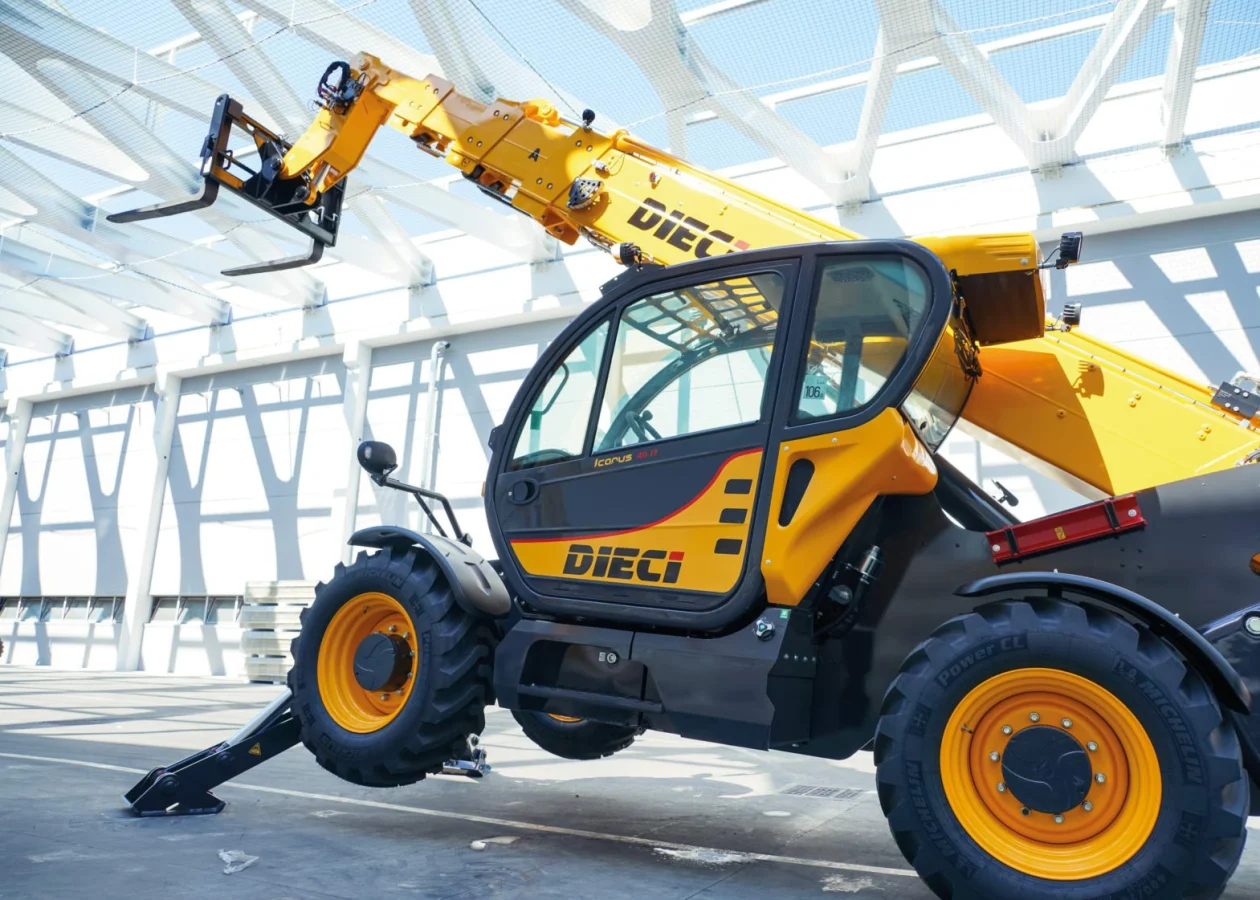
Do You Need Stabilisers on a Telehandler? A Guide to Stability, Reach and Lifting Performance
Telehandlers are designed to lift, move and place materials across a wide range of construction, infrastructure, industrial and agricultural applications. But as lifting heights and forward reach increase, maintaining stability becomes increasingly important.
This is where stabilisers, also known as stabiliser outriggers, can make a significant difference.
But do you actually need stabilisers on a telehandler? The answer depends on the type of work you are doing, the loads being handled, how far the boom needs to reach and the conditions of the worksite.
For applications involving heavy loads at height or extended forward reach, stabilisers can provide additional support and allow the telehandler to operate more effectively within its specified working envelope.
What are stabilisers on a telehandler?
Stabilisers are hydraulic support legs fitted to the front or, depending on the machine, multiple corners of a telehandler. When deployed, they transfer some of the machine’s weight and working forces into the ground, increasing the machine’s stability while lifting.
They are particularly common on higher-capacity and high-reach telehandlers, as well as rotating telehandlers designed for demanding lifting and placement applications.
The stabilisers are deployed when the machine is positioned at the work area and retracted before travelling. They should only be used on suitable, firm ground and in accordance with the machine’s operating instructions and load charts.
What do telehandler stabilisers actually do?
The primary purpose of stabilisers is to increase the machine’s stability during lifting operations.
As the boom extends forwards, the load creates a greater moment around the front of the machine. The further the load moves from the machine, the greater the effect on stability.
Stabilisers provide additional support at the front of the machine, helping maintain a stable working platform when handling loads at significant height or reach.
This can be particularly valuable when placing materials on upper floors, positioning structural components or handling heavy loads where precise placement is required.
When are stabilisers useful?
Not every telehandler requires stabilisers. Many conventional telehandlers are designed to perform a wide range of material-handling tasks without them.
However, stabilisers become particularly useful when the job involves:
- Heavy loads at significant lifting heights
- Extended forward reach
- High-reach construction work
- Steel erection and structural installation
- Loading and unloading at height
- Placing materials over obstacles or structures
- Industrial maintenance and equipment installation
- Challenging or uneven work areas
- Applications where precise load placement is required
For example, the Dieci Icarus 45.17 GD uses front stabiliser outriggers to provide additional stability when handling heavy loads at height or extended reach. The machine offers a maximum lift height of 16.4 metres and up to 12.6 metres of forward reach.
The benefits of stabilisers on a telehandler
1. Improved stability when lifting
The most obvious benefit is increased stability.
Deploying the stabilisers provides additional support while the machine is stationary and carrying out lifting operations. This can be particularly important when the boom is extended and the load is positioned away from the machine.
A more stable machine also provides the operator with greater confidence when positioning loads accurately.
2. Better performance at height and reach
A telehandler’s lifting capacity isn’t simply determined by its maximum rated capacity.
As the boom is raised and extended, the machine’s available lifting capacity changes. Load charts account for factors including boom angle, extension, load position and attachment configuration.
On machines designed to operate with stabilisers, deploying them can provide a different working configuration and corresponding load chart.
This is why stabilisers can be particularly valuable for high-reach applications where the machine needs to place substantial loads well away from the chassis.
3. Greater precision when positioning loads
Stability isn’t only about how much weight a telehandler can lift.
It is also about being able to place that load accurately.
When working on construction sites, for example, an operator may need to position materials onto a building, place structural components or deliver equipment to an elevated work area.
Additional stability can help provide more controlled and predictable load placement, particularly when working at significant reach.
4. Greater capability for demanding applications
Stabilisers allow manufacturers to design telehandlers for applications that demand greater reach, lifting height and load-handling capability.
This makes stabilised telehandlers particularly useful in areas such as:
- Commercial and high-rise construction
- Infrastructure projects
- Steel erection
- Industrial construction
- Mining and heavy industry
- Equipment installation
- Maintenance and shutdown work
The Dieci range includes machines with stabilising outriggers for applications where high lifting performance and stability are essential. The Runner 40.13, for example, features front stabilising outriggers for handling heavy loads at height.
5. Improved capability on challenging worksites
Stabilisers can also be valuable where ground conditions and site access make conventional lifting more difficult.
However, they don’t make unsuitable ground safe.
The stabiliser feet need to be positioned on firm ground capable of supporting the machine and load. If the feet sink or the machine is positioned incorrectly, stability can actually be compromised. Dieci’s operating documentation specifically warns about the importance of ground conditions when deploying outriggers.
This means operators need to consider ground conditions, machine positioning and the manufacturer’s operating requirements before deploying stabilisers.
Do stabilisers increase a telehandler’s lifting capacity?
This is one of the most important points to understand.
Stabilisers don’t simply mean a telehandler can lift more weight in every situation.
Instead, the machine may have different rated capacities and working envelopes depending on whether the stabilisers are deployed. The appropriate load chart must always be used for the machine’s specific configuration.
Load capacity can vary significantly depending on:
- Boom extension
- Lift height
- Load centre
- Attachment
- Machine configuration
- Stabilisers
- Ground conditions
For this reason, operators should never assume that deploying the stabilisers automatically makes any particular lift safe. The load chart for the exact machine and configuration remains the authority for determining the permitted lift.
Stabilisers vs conventional telehandler operation
Whether you need stabilisers largely comes down to how you intend to use the machine.
For general material handling, loading and unloading trucks, moving pallets around a construction site and transporting materials across a worksite, a conventional telehandler may provide everything you need.
If the job involves regularly lifting heavy materials to significant heights or positioning them at long forward reach, a telehandler with stabilisers may be a better choice.
This is particularly relevant when comparing machines based purely on their headline lifting capacity.
A telehandler rated to lift a certain amount at short reach may have a substantially lower capacity when the boom is fully extended. Looking at the machine’s complete load chart is therefore far more useful than comparing maximum capacity figures alone.
What applications benefit most from stabilisers?
Stabilised telehandlers are particularly well suited to applications where reach, height and load placement are critical.
Construction
Stabilisers can be valuable when lifting materials to upper floors, positioning structural components, loading materials onto elevated platforms or working around larger structures.
Steel erection
Steel beams and structural components can be heavy, long and difficult to position. A telehandler with stabilisers can provide the stability and reach required for controlled placement.
Infrastructure
Bridge construction, major civil projects and infrastructure work can involve heavy materials and difficult access. High-reach telehandlers with stabilisers can provide an alternative to larger lifting equipment for certain applications.
Mining and industrial work
Mining and industrial sites often require equipment to move and position heavy components in demanding environments. Machines such as the Dieci Icarus 45.17 GD are designed specifically for these types of applications, combining high lifting capacity, long reach and stabilising outriggers.
Maintenance and equipment installation
Stabilisers can also be useful when precise positioning is required during equipment installation, maintenance and shutdown work.
Do all telehandlers need stabilisers?
No.
Stabilisers are an important feature for certain applications, but they aren’t essential for every telehandler.
A standard telehandler without stabilisers can be highly effective for general material handling and construction work, particularly where loads are handled closer to the machine and at moderate lifting heights.
The right choice depends on the actual requirements of the job.
Before choosing a machine, consider:
- What is the heaviest load you need to lift?
- How high does it need to be lifted?
- How far forward does it need to be placed?
- Which attachments will you use?
- What are the ground conditions?
- How much space is available on site?
- Will the machine need to travel regularly between lifting locations?
- How frequently will you be performing high-reach lifts?
These questions provide a much better basis for choosing a telehandler than maximum lifting capacity alone.
Choosing the right telehandler
Stabilisers are just one part of the equation when selecting a telehandler.
Lift capacity, maximum height, forward reach, machine dimensions, attachment compatibility, hydraulics, transmission and stability systems all need to be considered together.
For example, Dieci’s Zeus 33.11 uses proportional-control outriggers and a transverse levelling system to provide controlled, stable operation on uneven or sloping ground.
For higher-reach applications, machines such as the Icarus and Pegasus ranges provide more substantial lifting and reach capabilities, with the Pegasus 360 50.21 using four independent hydraulic outriggers alongside other stability systems.
The important thing is to match the machine to the actual work it will be performing.
Are stabilisers right for your telehandler?
If your work regularly involves lifting heavy loads at height, reaching well beyond the front of the machine or accurately positioning materials in elevated or difficult-to-access locations, stabilisers can provide a significant advantage.
They provide additional support during lifting operations and, on machines designed for stabilised operation, can form an important part of the machine’s overall lifting capability.
However, stabilisers are not a substitute for correct machine setup, suitable ground conditions or proper load-chart use. The operator must always work within the manufacturer’s specified limits and use the correct load chart for the machine, attachment and operating configuration.
If you’re choosing a telehandler for high-reach construction, infrastructure, mining or industrial work, consider not just how much the machine can lift, but how it performs when that load needs to be lifted high and placed at reach.
That’s where the right stabilised telehandler can make a significant difference.
Frequently Asked Questions About Telehandlers
What are stabilisers used for on a telehandler?
Stabilisers, or outriggers, provide additional support when a telehandler is carrying out lifting operations. They can improve stability when handling heavy loads at significant height or extended reach, particularly on machines designed to operate with stabilisers.
Do all telehandlers have stabilisers?
No. Stabilisers are not required on every telehandler. They are more commonly found on high-reach, high-capacity and rotating telehandlers designed for demanding lifting and placement applications. The right configuration depends on the type of work, required lift height, reach and load capacity.
Do stabilisers increase a telehandler's lifting capacity?
Stabilisers can change the machine’s rated lifting capacity and working envelope, but they do not simply increase capacity for every lift. The correct load chart must always be used for the machine’s specific configuration, including boom position, reach, attachment and whether the stabilisers are deployed.
Can telehandler stabilisers be used on uneven ground?
Stabilisers can help provide stability when working on uneven terrain, but they must be positioned on firm ground capable of supporting the machine and load. If the stabiliser feet sink into soft or unstable ground, machine stability can be compromised. The machine must also be correctly levelled and operated within the manufacturer’s specified limits.
Which telehandler applications benefit from stabilisers?
Stabilisers are particularly useful for high-reach and heavy lifting applications such as construction, steel erection, infrastructure, mining, equipment installation and industrial maintenance. They can provide additional stability and control when placing heavy loads at height or extended reach.